Banner for product blog pages
Skip image slider
Banbury Internal Mixer
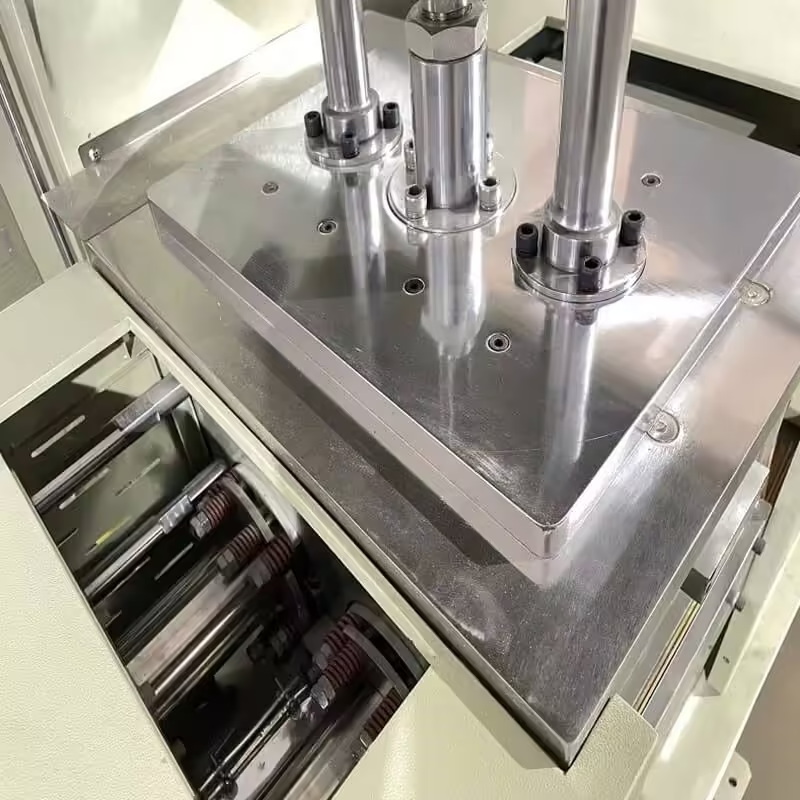
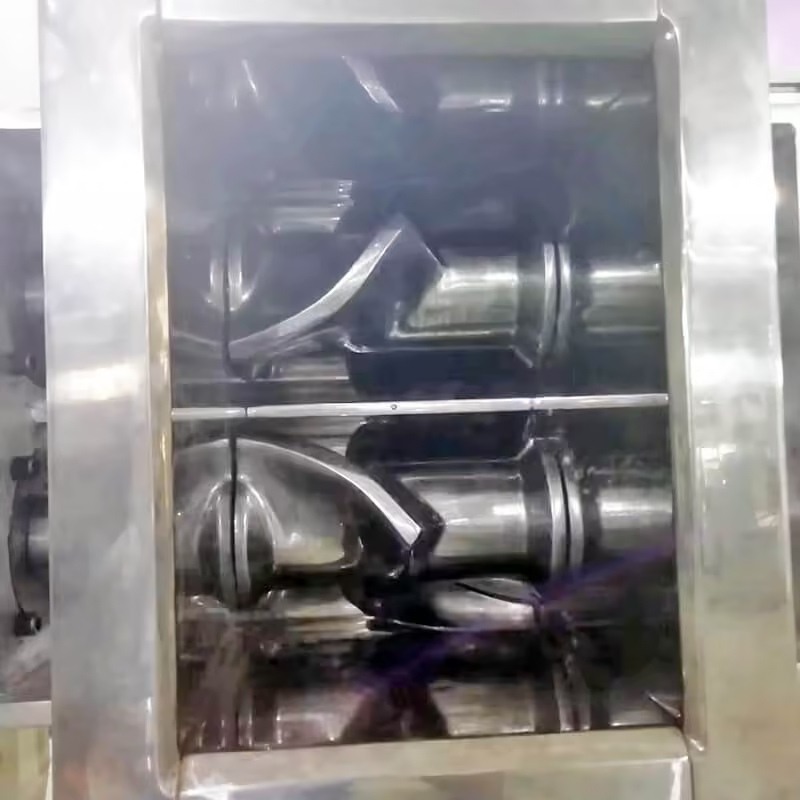
Mixing chamber of internal mixer
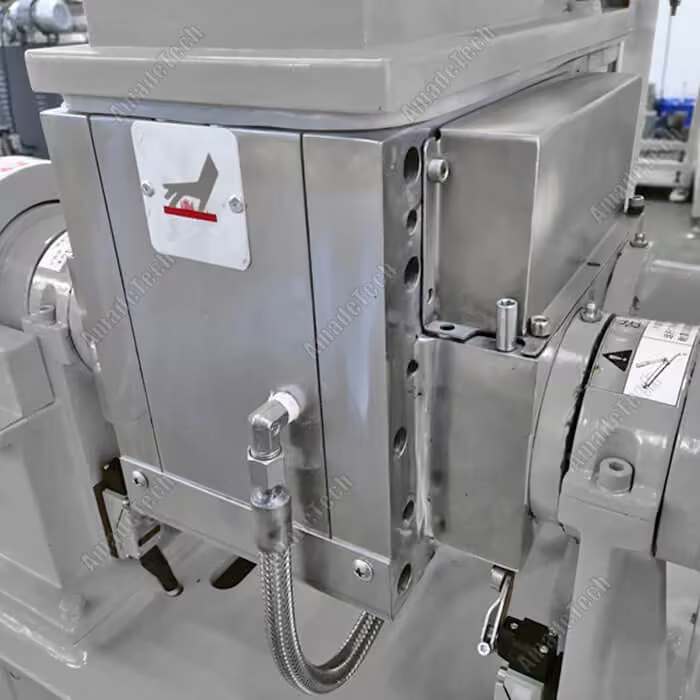
Ram of internal mixer
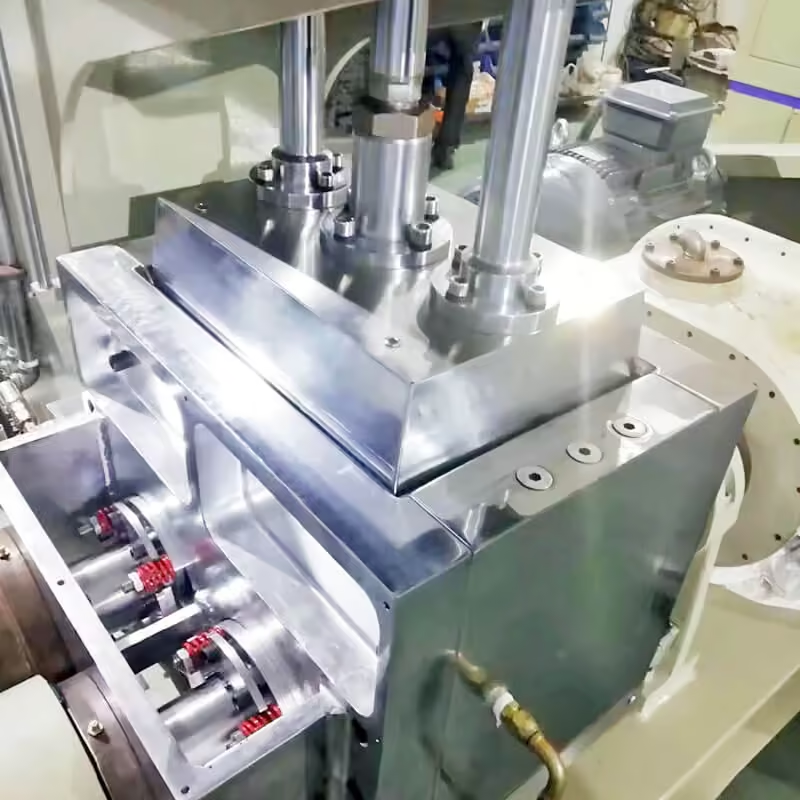
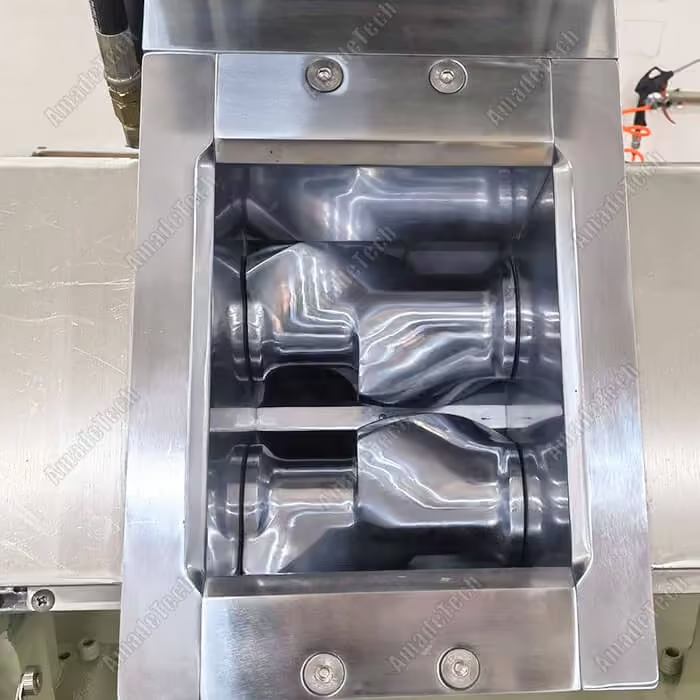
Banbury rotors of internal mixer

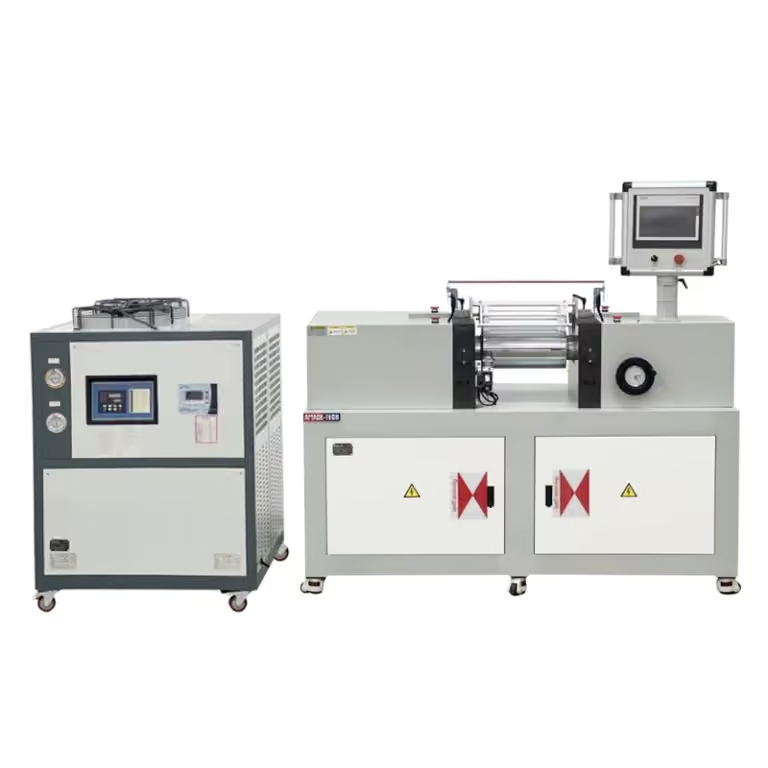
Lab Banbury Internal Mixer

Model

AT-R7028 series

Applications 

Used to mix, knead and disperse rubber, plastics and other chemical raw materials

Standards

ASTM D3182, ISO 2393, etc.

Lab Banbury Internal Mixer Description

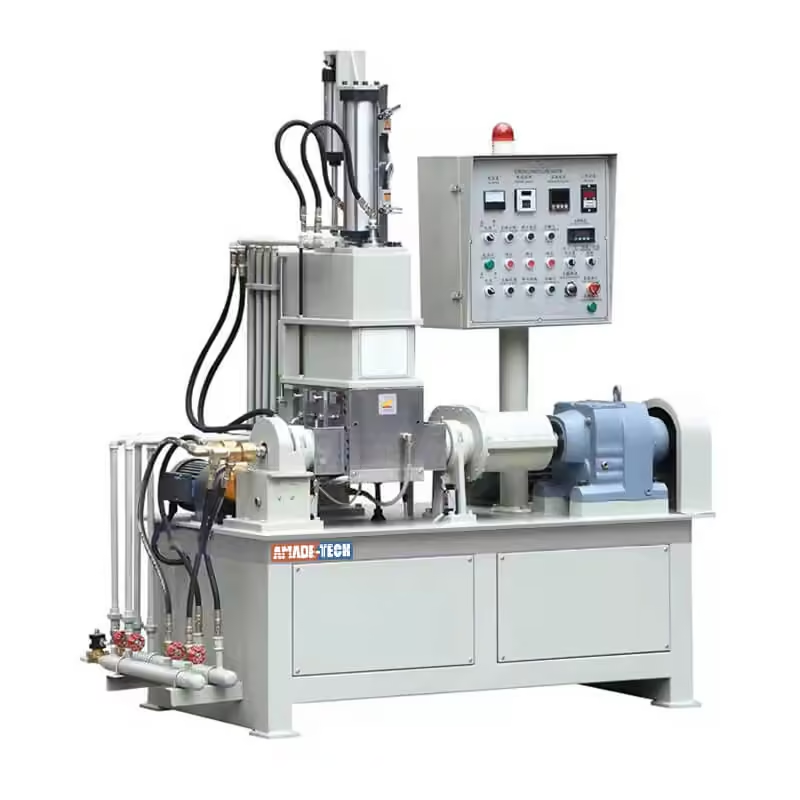
Banbury Mixer is the most commonly used Lab Internal Mixer. It is a high-intensity intermittent mixing equipment developed on the basis of the two roll mill for mixing, kneading and dispersing rubber, plastics and other chemical raw materials. The internal mixer has a pair of rotor blades with a specific shape and rotating toward each other, and can plasticize and mix the materials in a sealed chamber with adjustable pressure and temperature. Compared with open mixers, laboratory internal mixers have good sealing and a high degree of automation, which can significantly reduce operating risks and labor intensity for operators and improve processing efficiency.

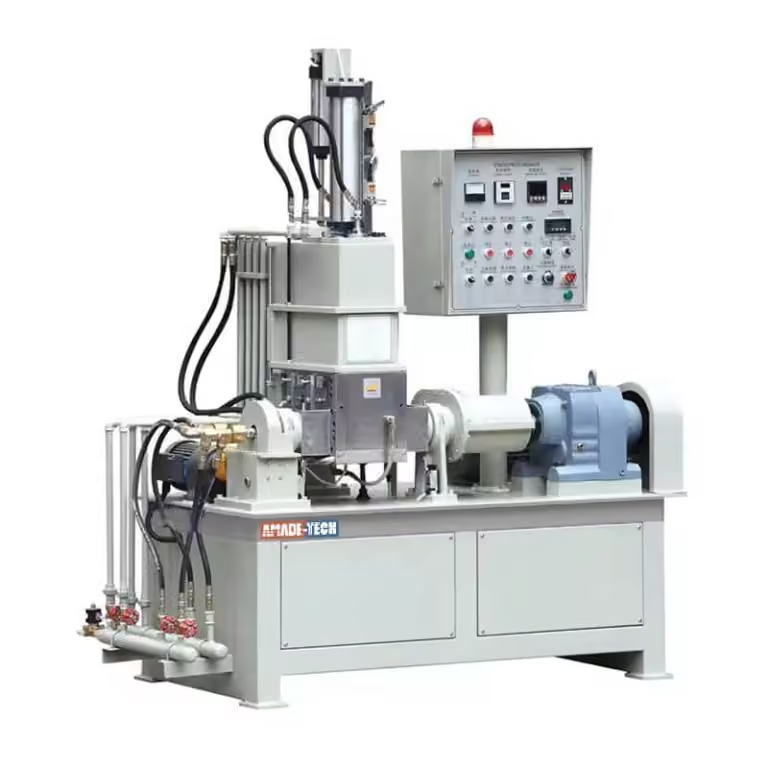
AmadeTech lab Banbury internal mixer is a kneading equipment with tangential and two-edged rotors. It mainly consists of a rotor, a mixing chamber, a feeding and pressing device, a discharging device, a transmission device, a controller, a machine base, and other parts.

Rotors

Our internal mixer is equipped with two Banbury rotors arranged in parallel, and the blade tips of the two do not touch each other. The rotor is made of high carbon steel, and its surface is hard chromium plated to achieve extremely high hardness and excellent wear and corrosion resistance. The cross-section of the rotor is oval, and each rotor has two spiral ribs. The interior of the rotor has a cavity structure so that circulating cooling water can be introduced to cool the materials, which is required when mixing rubber materials. You can freely adjust the speed of the two rotors according to the processing needs under the control of the frequency converter, but their speed ratio is fixed. The spiral edges do not mesh with each other, which is conducive to enhanced mixing and shearing of materials. Distributive mixing happens when material is transferred from one rotor to the other and rubbed against the chamber wall.

If you want other types of rotors such as roller, dilta, cam etc., let us know and we will tailor it to your needs.

Banbury rotors

Banbury rotors

Mixing Chamber

The capacity of the mixing chamber is available in 0.2L / 0.5 L / 1 L / 3 L / 5 L and other different sizes for you to choose from. The walls of the mixing chamber housing the two rotors are also made of high carbon steel with hard chromium plating to resist the strong friction, squeezing and corrosion of the material being processed. Its bottom is a “W”-shaped structure, keeping the specified distance from the two rotors. The upper ram is an “M”-shaped structure, forming a closed chamber when it is lowered. There are heating devices and temperature monitoring sensors built into the mixing chamber walls to heat up and monitor the material temperature in real time. The interlayers of the mixing chamber allows circulating water to cool the material as needed.

In addition to this integrated chamber structure, we can also supply internal mixers with open-close type mixing chamber used in laboratories. Its chamber walls can be opened like a drawer to facilitate cleaning and inspection when changing materials.

mixing chamber of lab internal mixer

Mixing chamber

Feeding and Pressing Device

Unlike a production-type internal mixer equipped with a dedicated feeding hopper, our lab internal mixer allows you to feed materials directly into the chamber from the top. There is a vertically mounted air cylinder over the mixing chamber. The bottom of the cylinder’s piston is connected to an “M”-shaped ram. The piston can move up and down under control to make the ram cover move. The ram acts as a floating weight to press the material in the mixing chamber during processing, and can apply a pressure of 0.5 to 0.8 MPa to accelerate and strengthen the mixing effect. In addition, the equipment is also equipped with a dust cover that can be moved downwards along the ram under pneumatic control to isolate the processing area and the external environment, so as to prevent dust from escaping from the mixing chamber. We are also equipped with a cooling device for the ram: circulating water flows through the interior of the ram to take away the heat of the material during processing to help cool it down.

Discharging Device

The discharge port of conventional models of our mixing kneader is at the top of the mixing chamber rather than at the bottom. Taking into account the convenience of operation, we have designed an outward-tilting mechanism for the mixing chamber. The chamber is driven by a separate motor and a gear reducer with a brake. It drives the worm through the coupling, and the worm gear is fixed to the front rotor shaft. The rotation of the worm wheel makes the mixing chamber take the front shaft as the axis to realize the tilting of 110°. The outward flipping action facilitates the operator to discharge the processed materials. When pouring materials, you can control the two rotors to reverse to facilitate dumping. If your material is sticky and difficult to clean, an open-close mixing chamber may be a better option for you.

Controller

Regarding the controller of the lab Banbury mixer, we can provide two sets of solutions for flexible selection. One is a traditional button controller. Its panel is intuitive, easy to operate, and cost-effective. It allows you to preset the parameters and press corresponding buttons to give machine different operation instructions. The other is a Siemens PLC plus high-definition color touch screen human-machine interactive interface. All parameters can be set arbitrarily on the screen and instructions can be given to the machine to allow the machine to perform desired actions. The rotor speed, temperature, torque can be dynamically displayed on the screen in real time, making the entire machine look more advanced and richer in functions. You can tell us your specific configurations when requesting quote.

Lab Banbury Internal Mixer - Technical Specifications

Model

AT-R7028 series

Mixing chamber volume

0.2L/0.5L/1L/3L/5L/10L optional

Hardness of chamber and rotor

HRC60

Chamber shape

M + W

Upper pressure of chamber

0.5 ~ 0.8 MPa (connected to external air source)

Rotor type

Banbury or others

Rotational angle of chamber when discharging

110°

Temperature range

Room temp. ~ 300 °C

Heating mode

Electrical heating

Cooling mode

Circulating water

Rotor speed

0 ~ 40 RPM adjustable

Friction ratio

1:1.3

Controller

Microprocessor + buttons or PLC touch screen optional

Power supply

3-phase, AC 380 V, 30 A

Dimensions

1450 mm (W) x 650 mm (D) x 1730 mm (H)

Lab Internal Mixer Working Principle

The raw materials or mixtures fed into the mixing chamber is stirred by two rotors with spiral edges that rotate relatively inward at a certain speed ratio and at a specified speed, simultaneously subjecting to a downward pressure given from the upper ram. Under constantly and repeatedly intense shearing and squeezing, the material undergoes shear deformation and continuous kneading. Dispersing and mixing are finished in high-shear tapering nip regions between rotor tips and between the rotors and the mixing chamber walls. The desired mixing state is gradually achieved after processing for a specified time.

Lab Banbury Internal Mixer Features

  • Compact in size and takes up small footprint.
  • It can significantly reduce the labor intensity of operators.
  • The rotors have high hardness, good wear resistance and corrosion resistance.
  • The mixing chamber has good sealing performance and high degree of automation.
  • Various capacities of chambers are available.
  • Allows the cylinder to apply a specified pressure to the material in the mixing chamber.
  • The mixing chamber has heating and cooling functions, and the rotors and ram cover are water cooled.
  • The mixing chamber can be flipped outward 110 degrees for easy discharging.
  • Push-button controller or PLC and touch screen controller is available.
  • The whole machine has a high degree of automation, good stability and durability.
  • Machines can be customized with unique features.
  • Simple to use and easy to maintain for users.

FAQs About Lab Internal Mixer

Products Categories
Get A Free Quote
Contact Form Demo (#3)

Get a Customized Quote for a Lab Internal Mixer that Best Meets Your Needs

Tell us about your unique testing requirements to get a personalized solution from AmadeTech

Related Products

Hands-free Lab Two-Roll Mill with Automatic Scraper
Open-close Dispersion Kneader Machine
Banbury Internal Mixer
Lab two roll mill
Benchtop two roll open mill

Related Posts

blog cover
blog-cover-1
blog-cover
Choosing a Right Lab Two Roll Open Mixing Mill Key Considerations and Features to Look for
error: Content is protected !!
Scroll to Top

Get A Free Quote Now !

Contact Form Demo (#3)
If you have any questions, please do not hesitate to contatct with us.