Banner for product blog pages
Skip image slider
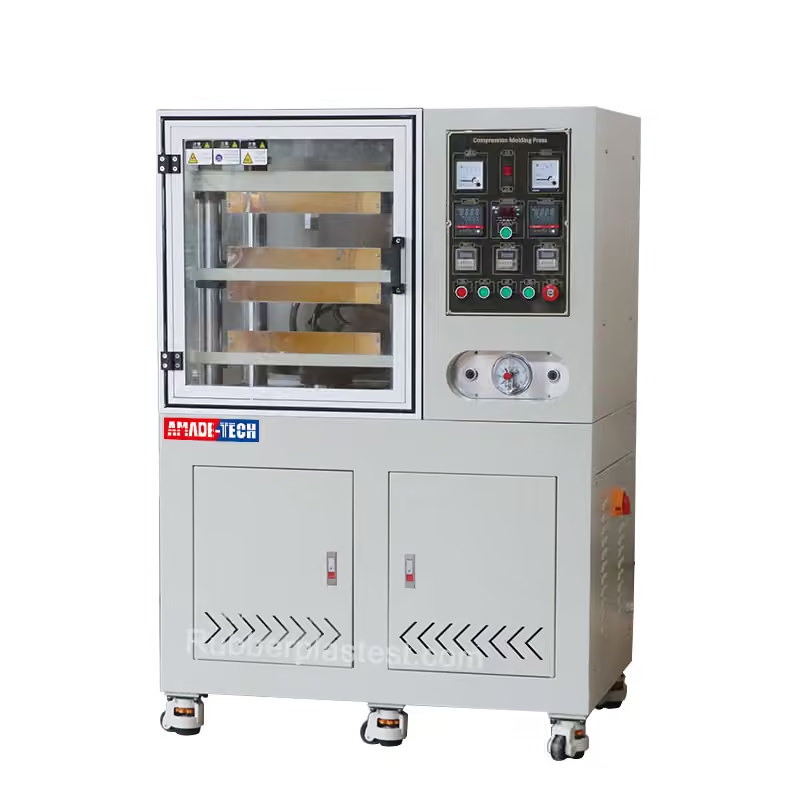
Lab hydraulic vulcanizing press
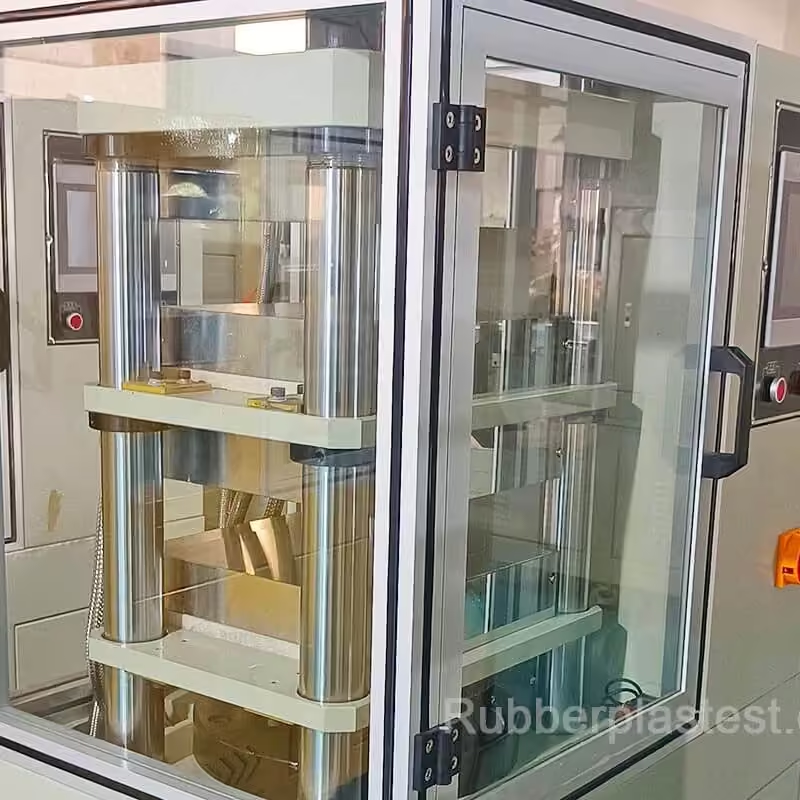
Double-layer working area of vulcanizing press
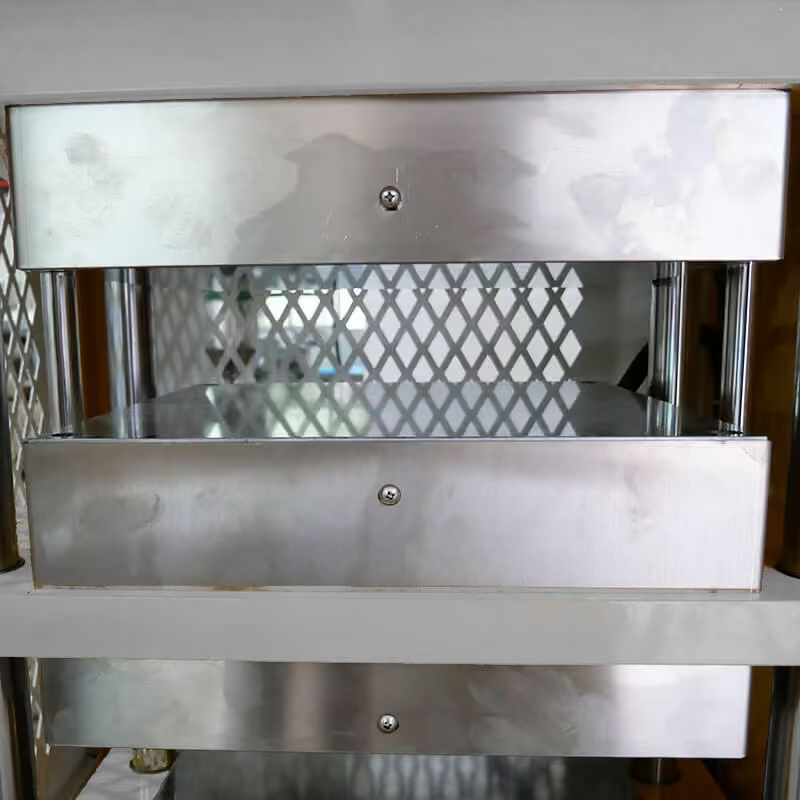
pressing plate of hydraulic press
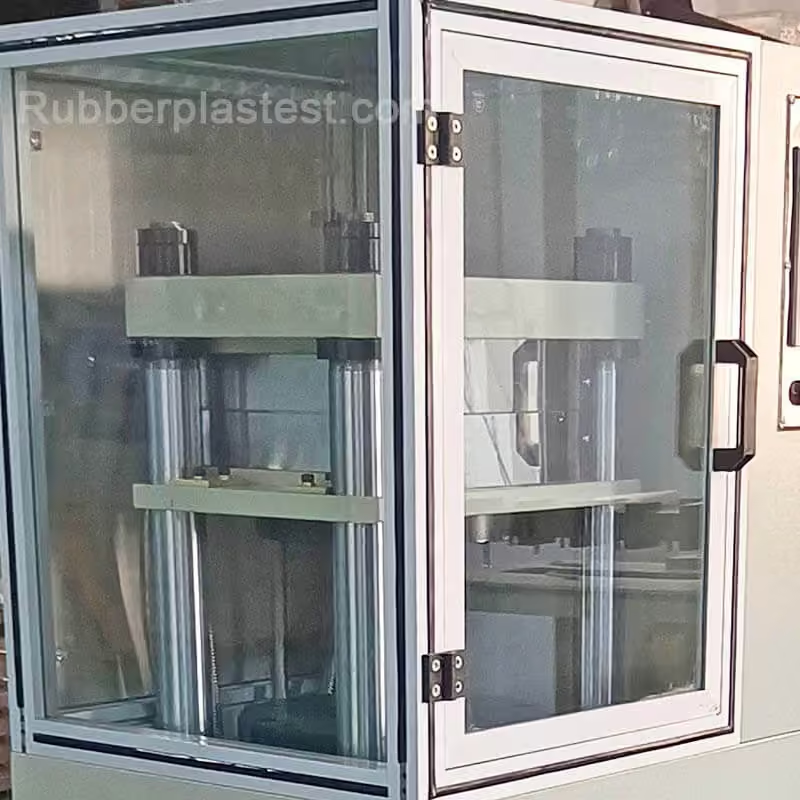
single-layer working area of vulcanizing press

Lab Hydraulic Press

Model

AT-R7026 series

Applications 

Lab hydraulic compress press for curing rubber test slabs or molding various sheet plastic samples for subsequent testing and comparison.

Lab Hydraulic Press Description

Lab Hydraulic Press is also called a plate vulcanizer or compression press. It owns at least two platens can be heated to a prescribed high temperature used to mold the mixed rubber compound at a specified pressure for a given period of time for achieving the purpose of vulcanization. In addition, it can also be used to hot press or mold PP, PA, PE, ABS and other resins or mixtures for conducting color comparison, formula testing and related mechanical tests.

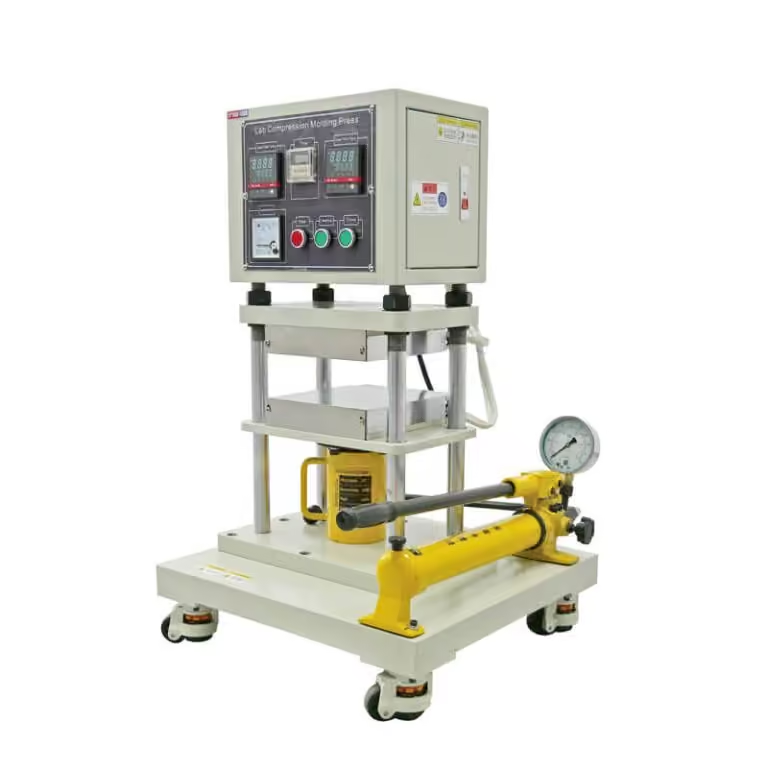
The lab vulcanizing machine is mainly composed of hydraulic system, guide pillars, lifting platform, pressure platens and control system.

pressure plate structure

pressure plate structure

Hydraulic system

Our lab hydraulic press adopts floor-standing structure, which is mainly divided into upper and lower parts. The hydraulic system, which accounts for the heaviest weight, is located at the lower part of the machine, which plays a role in stabilizing the center of gravity at the bottom. You are allowed to open the doors to enable the main body of the hydraulic system to be exposed, which is convenient for maintenance and repair. According to different load requirements, we can configure the machine with hydraulic systems of different capacities, including 30T, 50T, 100T or specified by you.

Guide pillars & Platforms

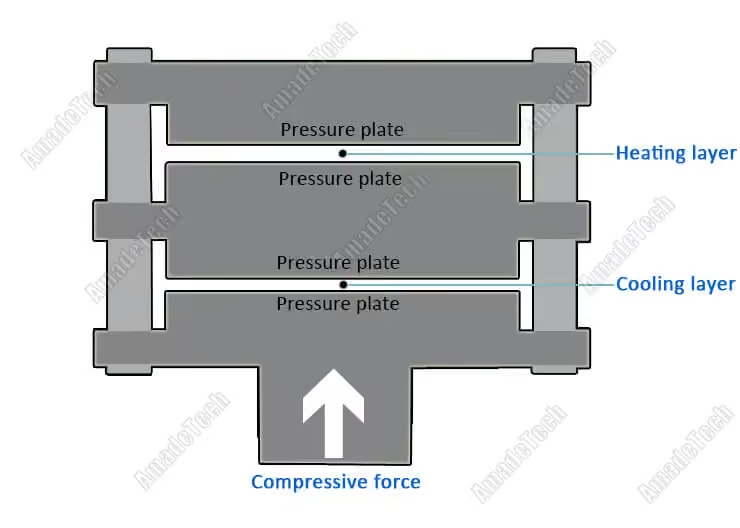
The left side of the upper part of the machine is the vulcanization area or heat-press area. It is mainly composed of four precision guide pillars, three iron plate platforms, four pressure platens, and a protective cover. You can see four shining steel columns stand vertically on the base. If these four points are connected, it will form a standard rectangle. Each column passes through three guide holes at the corners of the three platforms. The top platform is locked on the top of the four columns with nuts forming a stable frame as a whole with strong load capacity. The movable platform in the middle is limited downward and can only move upward guided by the pillars under the action of external force. The geometric center of the bottom surface of the lowest movable platform is connected to the ram of the hydraulic cylinder to guarantee that the pressure is transmitted from bottom to top during operation. Three platforms divide the entire area into two layers of space. Depending on your actual needs, the machine can also be configured with only one layer.

Pressure Platens

For AmadeTech’s regular models, four pressure platens made of KDB high carbon steel are attached to the three platforms mentioned above to form two processing areas, and the parallelism between each two platens is less than 0.02 mm. Different sizes of pressure platens are available from us. Each platen has been finely processed and has the characteristics of high temperature resistance, corrosion resistance, fast heat transfer, and not easy to deform. The two upper platens used for heating have built-in heating tubes that can heat up the platens to 300°C, and are equipped with high-precision temperature sensors to collect real-time temperatures. We adopt P.I.D self-tuning mode with automatic temperature compensation function to ensure temperature stability and uniformity. If you want to pursue a more uniform platen temperature with a deviation of less than 1°C, we can also configure an additional oil heating device instead of electric heating as heating source. The two lower platens used for cooling the material have built-in water channels and can be connected to external tap water, which is used to achieve the purpose of one-time cooling and molding of the material. If you don’t want the cooling function, we can remove the two cooling platens. In addition, we can integrate the heating and cooling functions into two platens in the same layer, so that you can directly perform the cooling step after heating without transferring materials.

Human-machine Interface

We laid out the human-machine interaction device on the right side of the upper part of the machine. There are two types of operation panels for users to choose from: push-button panel and PLC touch screen panel. The push-button panel is covered with various control buttons, thermostat, pressure gauge and pressure adjustment knob, ammeters, timer, etc. You need to manually press the corresponding buttons to set required parameters, and start heating, platen closing, timing, platen opening, cooling functions, etc. Some of our push-button models also support automatic operation mode. The touch screen panel is the interface based on a PLC supporting multi-stage pressurization. You are available to use your finger to click on the screen to freely set the platen temperatures, preload pressure and time, exhaust pressure, exhaust number, exhaust time, multiple boost pressures, corresponding cure times, etc. The system has a built-in calculation formula, allowing you to input the length and width of the compression area for precise pressure application. During the vulcanization operation, the machine is able to automatically complete all operations according to the set molding program and generate processing curves. Moreover, the platen temperature, pressure, platen dynamic running diagram, real-time status, etc can be displayed on the screen in real time for you to view.

Lab Hydraulic Press - Technical Specifications

Model

AT-R7026 series

Load capacity

30t / 50t / 100t or customized

Pressure sensor

Japanese platinum resistance sensor

Pressure gradient

Pre-pressurization and boosting

Platen material

SKD mold steel

Platen surface treatment

Mirror chrome plating

Platen hardness

HRC60

Platen area

300 x 300 mm or customized

Parallelism

≦±0.02mm/m

Temperature range

Ambient temp.~ 300℃

Temperature accuracy

≦2℃

Heating mode

Electrical heating

Cooling mode

Water circulation

Working areas

Upper layer for heating and the lower layer for cooling / Or both are integrated into one layer

Control mode

Manual / Auto

Controller

Microprocessor + buttons / PLC+touch screen

Dimensions

920 mm (W) x 500 mm (D) x 1450 mm (H)

Power supply

Three-phase, AC 380 V

Weight

Appr. 700 kg

Hydraulic Press Working Principle

The upper and lower pressure platens are heated to the required curing temperature and maintained at a constant temperature. The mold containing the rubber compounds is placed in the center of the lower pressure platen. The hydraulic system supplies pressure oil into the hydraulic cylinder under control to drive the piston to move upward to push the lower pressure platen upward until it touches the upper pressure platen and compresses the mold to ensure that the rubber material obtains the pressure required for vulcanization. After a certain period of time, the vulcanization is completed, and the pressure will be automatically relieved. Due to the dead weight of the piston and lower platen, the mold will automatically descend and exposed for removal. If necessary, the mold needs to be cooled by means of cooling water circulating through the pressure platens following the cure process.

Lab Hydraulic Press Features

  • Different hydraulic press capacities are available from AmadeTech.
  • It adopts high-precision wear-resistant guide pillars to ensure smooth lifting and lowering under strong loads.
  • Pressure platens are fabricated from SKD mold steel of Rockwell hardness 60 HRC, and the surface has been treated by carburizing, chromium plating, polishing and other processes.
  • The size of the pressure platens can be customized.
  • The pressure platens have heating and water cooling functions.
  • Adopts high-precision temperature sensor and P.I.D self-adjusting temperature control.
  • The hydraulic system has an automatic pressure compensation function.
  • Physical-button panel or PLC touch screen control panel is available.
  • All electrical and water pipes are connected with flexible pipe fittings to avoid hindering the lifting and lowering of the pressure platens.
  • Supports presetting of pre-pressing time, pre-pressing pressure, exhaust number and time, boost pressure, vulcanization time, etc.
  • The molding process can also be dynamically displayed on the screen and monitored in real time. The vulcanizing curve is available to be displayed.
  • The processing area is equipped with protective cover to guarantee the safety of the operator.
  • The protective door is equipped with a safety self-locking device, which can automatically cut off all operations when opened.

FAQs About the Lab Hydraulic Press

Products Categories
Get A Free Quote
Contact Form Demo (#3)

Get a Customized Quote for a Lab Hydraulic Press that Best Meets Your Needs

Tell us about your unique testing requirements to get a personalized solution from AmadeTech

Related Products

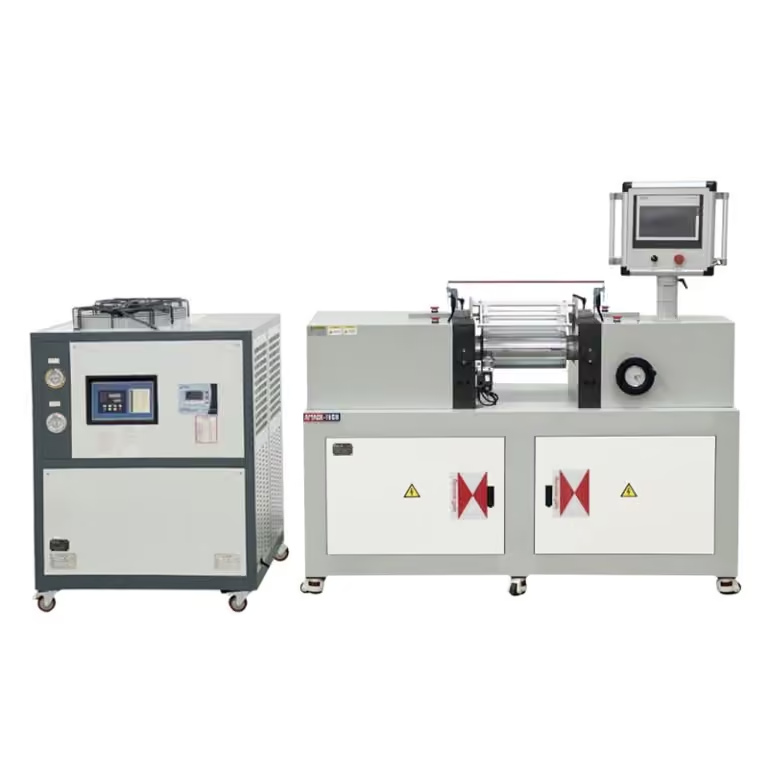
Hands-free Lab Two-Roll Mill with Automatic Scraper
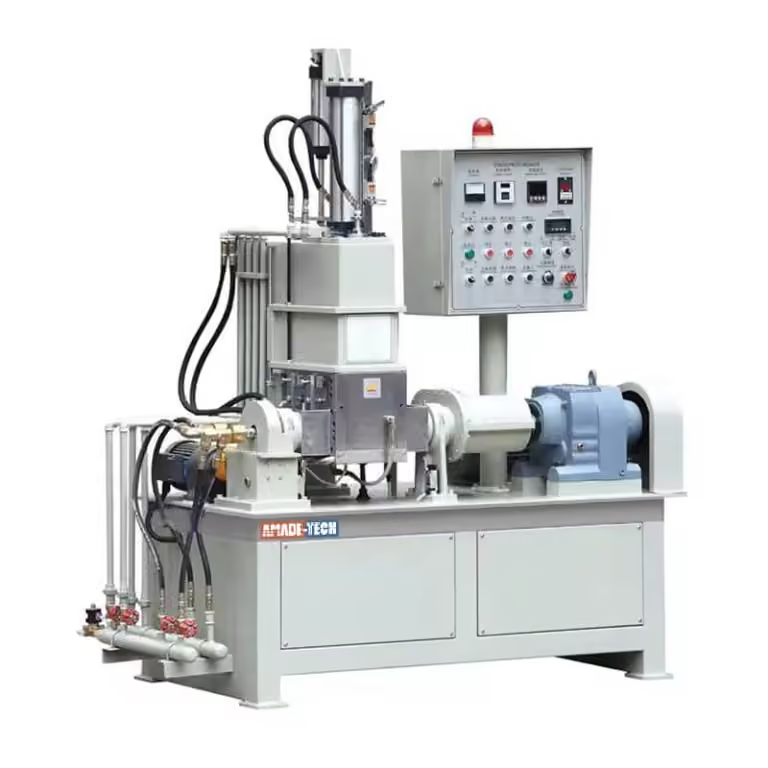
Open-close Dispersion Kneader Machine
Banbury Internal Mixer
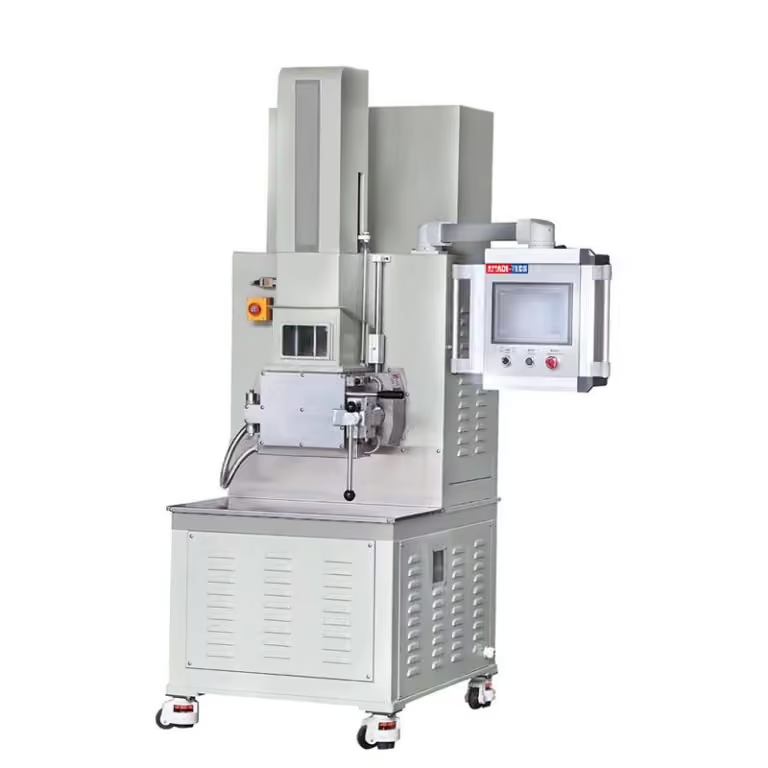
Lab Manual Compression Molding Machine
Lab two roll mill
Benchtop two roll open mill

Related Posts

blog cover
blog-cover-1
blog-cover
Choosing a Right Lab Two Roll Open Mixing Mill Key Considerations and Features to Look for
error: Content is protected !!
Scroll to Top

Get A Free Quote Now !

Contact Form Demo (#3)
If you have any questions, please do not hesitate to contatct with us.