Skip to content
EN 13900-5 Filter Pressure Value (FPV) Tester
Model
AT-P6150 series
Applications
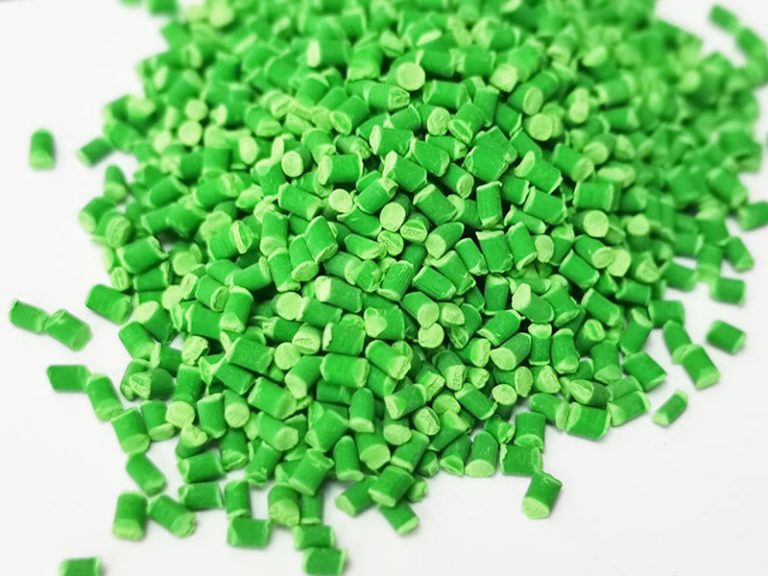
It is used to quantitatively evaluate the dispersion uniformity of pigments and additives in a carrier within color masterbatches, filler masterbatches, or functional masterbatches.
Pigment Dispersion Filter Tester Overview
The Filter Pressure Value(FPV) Tester is used to quantitatively evaluate the dispersion uniformity of pigments and additives in a carrier within color masterbatches, filler masterbatches, or functional masterbatches. This machine helps plastics researchers compare the dispersion effects of color masterbatches under different formulations, dispersants, or process conditions, allowing them to select the optimal solution. It can also perform factory inspections or incoming material quality checks on mass-produced color masterbatches. The FPV value can quickly identify products that fail due to poor dispersion, excessive impurities, or severe agglomeration.
Compliant Standard
BS EN 13900-5: 2005
FPV Test Principle
The base resin is fed into the extruder’s feed port, melted and plasticized by a small, precision single-screw extruder, and then pumped at a constant flow rate by a melt pump to a matching standard filter. The melt pressure directly in front of the filter is measured and used as the starting pressure. Next, a mixture of colorant masterbatch and base resin in a specified ratio is added to the extruder. Under constant temperature and flow conditions, insufficiently dispersed pigment agglomerates gradually clog the filter, causing the melt pressure in front of the filter to continuously rise. The system’s built-in high-precision pressure sensor records the pressure change curve in real time and collects the highest melt pressure. Based on relevant standards, it calculates the pressure difference between the starting pressure and the highest pressure, as well as the ratio to the pigment content, thus determining the FPV (Filter Pressure Value). A lower FPV value indicates better pigment dispersibility.
Detailed Description of Equipment Structure
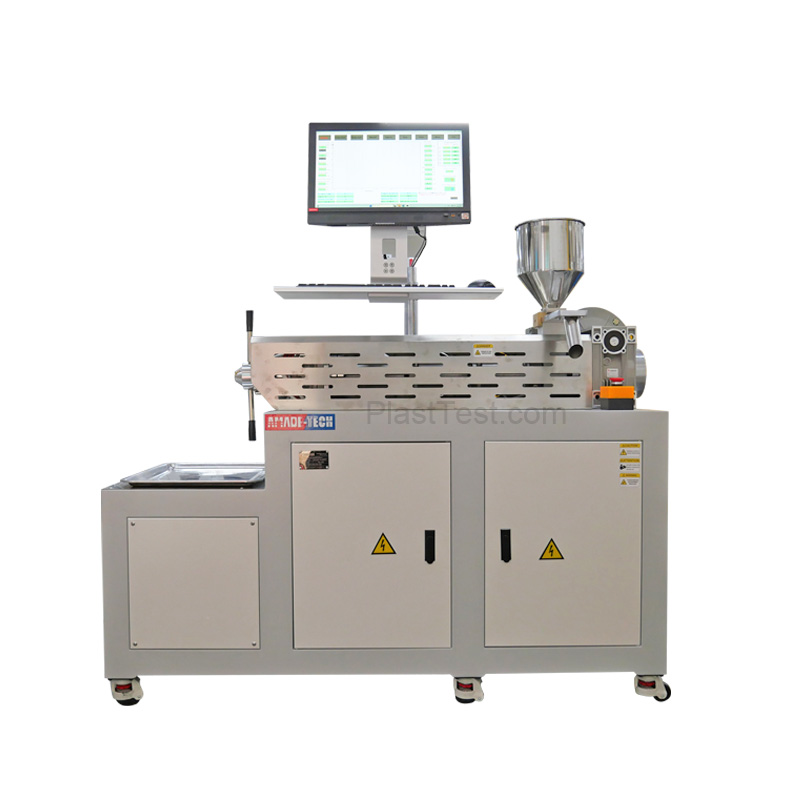
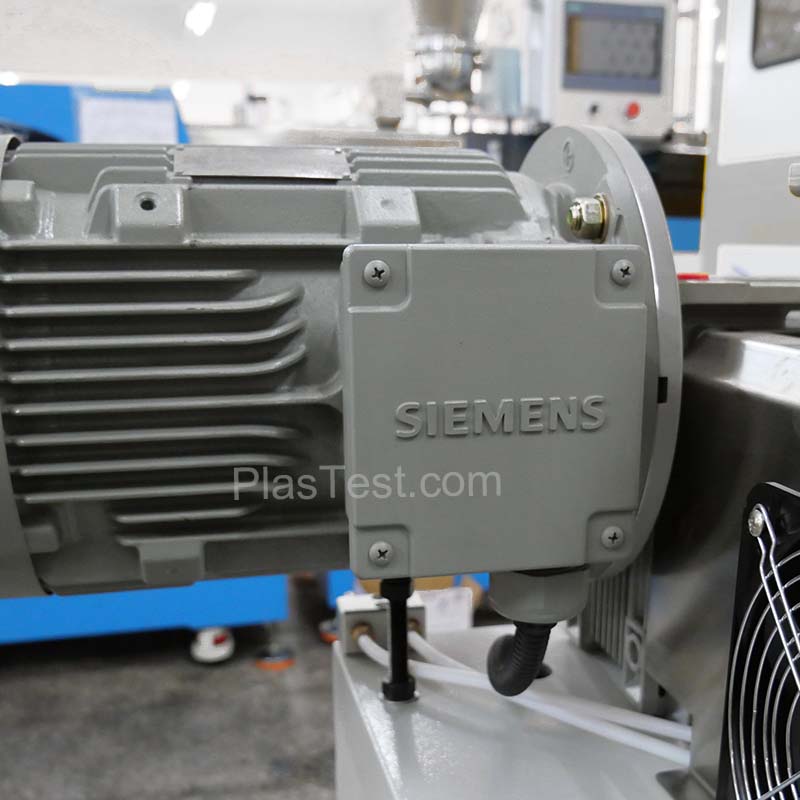
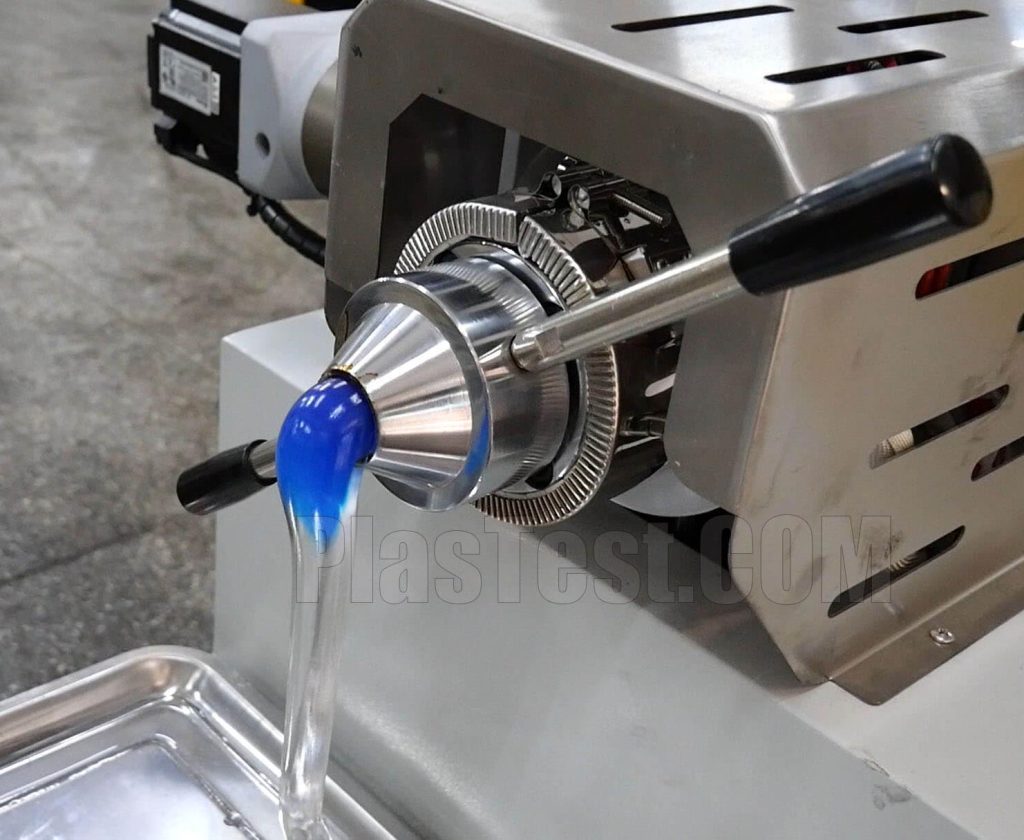
Our FPV tester is equipped with a single-screw extruder. The screw is made of high-grade, high-quality alloy nitrided steel, with a nitrided and polished surface for excellent hardness and surface roughness. The machine is equipped with a Siemens motor to drive the screw rotation. The screw speed can be adjusted with the support of a Siemens frequency converter. The barrel is equipped with multiple cast aluminum heaters to provide a constant high temperature to the material processing area. Simultaneously, the barrel is also equipped with water-cooling piping and multiple multi-blade fans to cool the processing area as needed. After the material is melted and plasticized by the single screw, it enters the rear section of the extruder, where a melt pump continues to transport the melt, ensuring a constant melt flow rate and preventing flow fluctuations from interfering with the pressure before the filter. A pressure sensor is installed before and after the melt pump. The sensor after the melt pump is located between the melt pump outlet and the filter assembly. The sensor before the melt pump is located at the melt pump inlet. Although the pressure value measured by this sensor is not included in the calculation of the filter pressure value, it can monitor the pressure before the melt pump and is linked to the screw speed to ensure sufficient material before the pump to provide conditions for constant flow. We can provide filter mesh sizes from 400 to 2400 mesh to meet the testing needs of different polymer materials.
Extrusion orifice
A computer monitor is installed on the upper part of the machine for human-machine interaction. The system is equipped with dedicated FPV testing software, and the operating language supports easy switching between Chinese and English. The testing interface has various virtual buttons that allow the operator to issue various operation commands, such as screw heating, screw start, melt pump start, printing, etc. Information such as temperature, pressure, parameters, and real-time pressure curves in the machine processing area are also displayed on the screen. The testing system can automatically obtain P1 and Pmax values and automatically calculate the filter pressure value. P1 is the initial melt pressure when the pure base resin passes through the filter and the system reaches equilibrium. Pmax refers to the highest melt pressure peak captured by the sensor before the filter during the entire testing cycle after the addition of the masterbatch mixture. FPV is the pressure value of Pmax minus the pressure value of P1, and then divided by the mass of the colorant.
Filter Pressure Value (FPV) Tester Technical Specifications
Model | AT-P6150 |
Screw&barrel material | 38CrMoAl chromium-molybdenum alloy special tool steel |
Control system | PLC |
Screw diameter | 20/25/30mm or specified |
Screw L/D | 25/28/33:1 or specified |
Screw speed | 0~95 rpm frequency control |
Pressure transducer measuring range | 0~35MPa |
Filter | 5-40 micron pore size |
Dimensions | 1250 mm (W) × 550 mm (D) × 1350 mm (H) |
Power supply | 3∮,AC380V,50Hz |
Filter Pressure Value (FPV) Tester Video
Filter Pressure Value (FPV) Tester Features
- The frame is welded from structural steel and has undergone stress treatment. The extruder feed inlet is a self-unloading hopper.
- The melt pump is driven by an AC variable frequency motor, ensuring precise speed control.
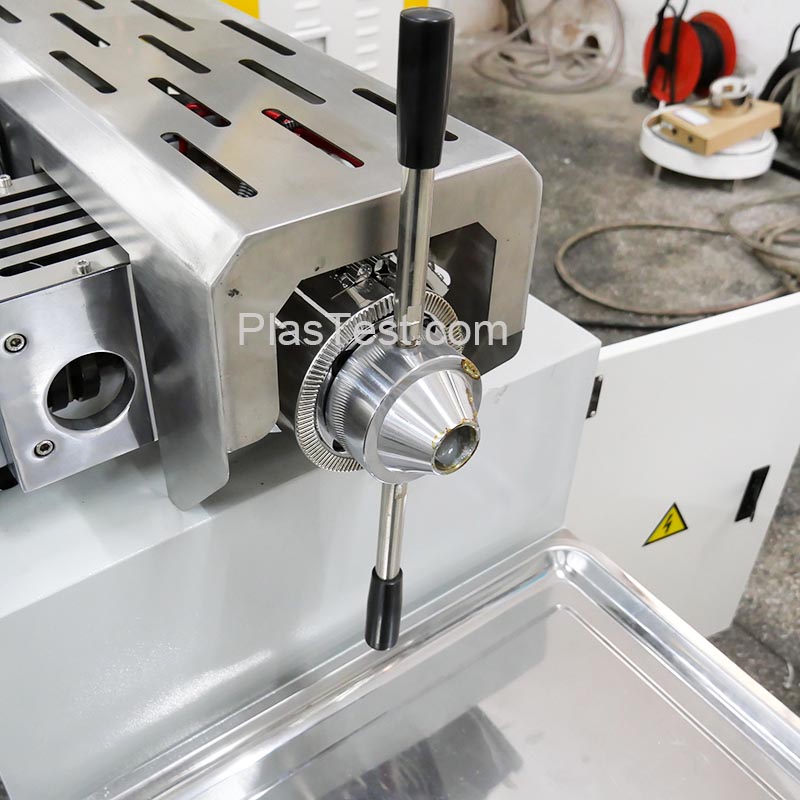
- It features a manual plate-type dual-station screen changer; the screen is nitrided for high hardness and wear resistance.
- It is equipped with a high-precision melt pressure sensor from the world-renowned brand Dynisco.
- The machine offers both water and air cooling.
- A high-precision melt pump from Taiwan ensures a constant feed rate.
- Real-time test curves are displayed on the screen.
- The system automatically calculates the FPV value.
- Test reports can be freely exported.
- Test results can be printed via a printer.
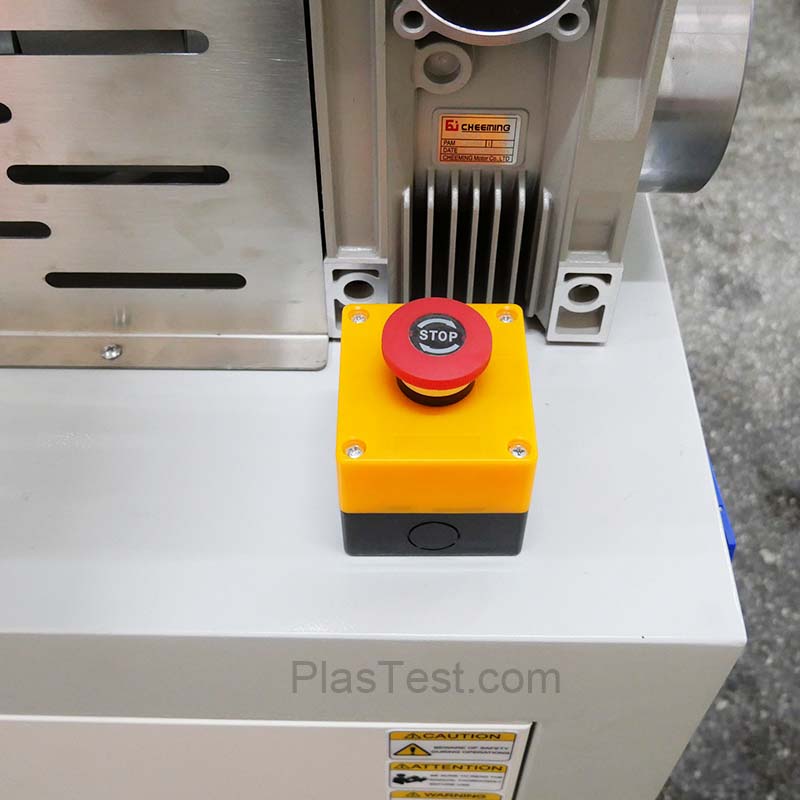
- Multiple emergency stop buttons are installed in different areas of the machine.
- It has overload, overpressure, and automatic shutdown protection functions for malfunctions.
Get Free Quote of Filter Pressure Value (FPV) Tester that Best Meets Your Needs
Tell us about your unique testing requirements to get a personalized solution from AmadeTech
Related Products
Related Posts